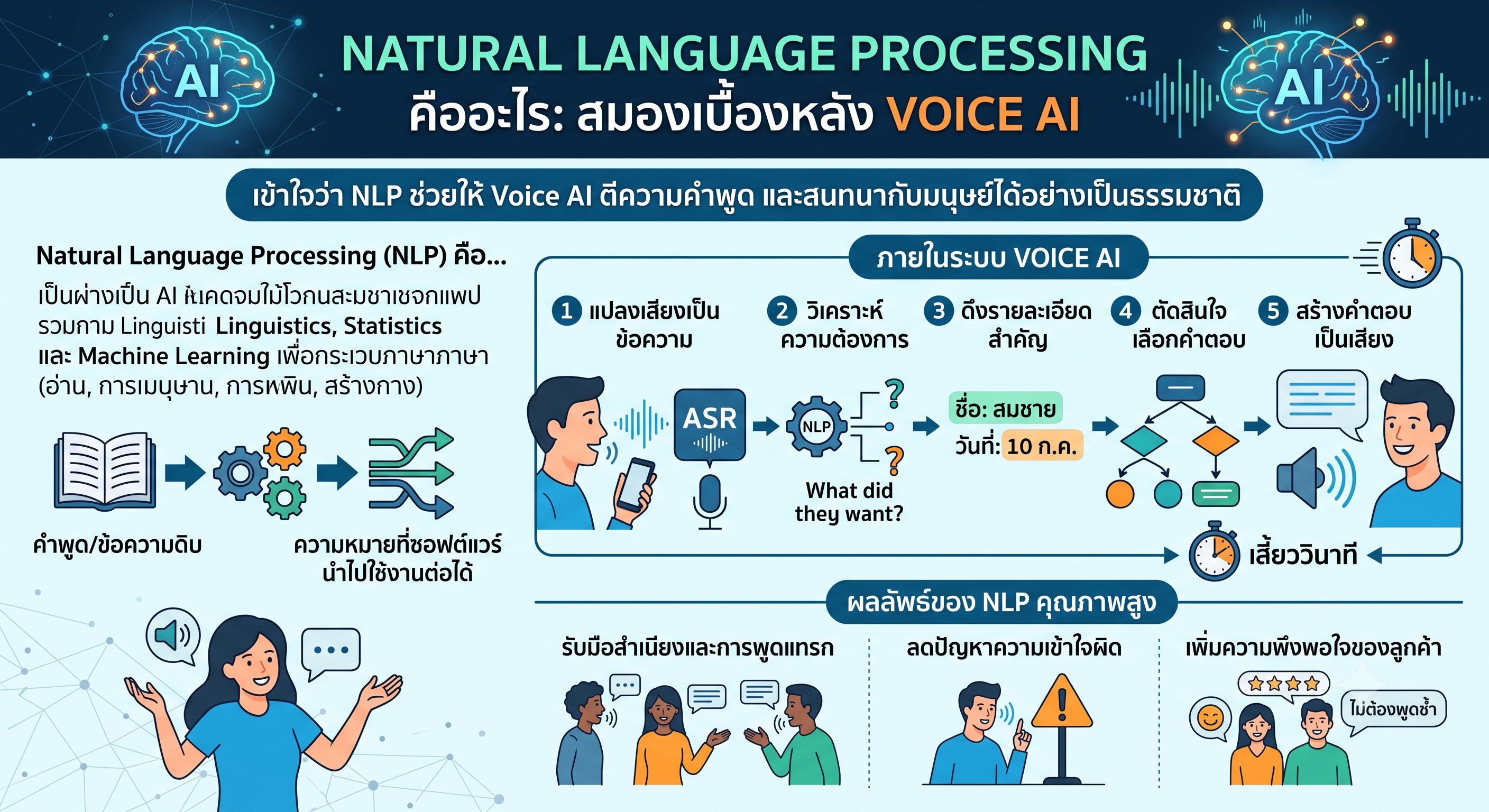
At the heart of every capable voice assistant is natural language processing, or NLP. It is the technology that allows a calling system to break down spoken words into meaning rather than just matching rigid keywords.
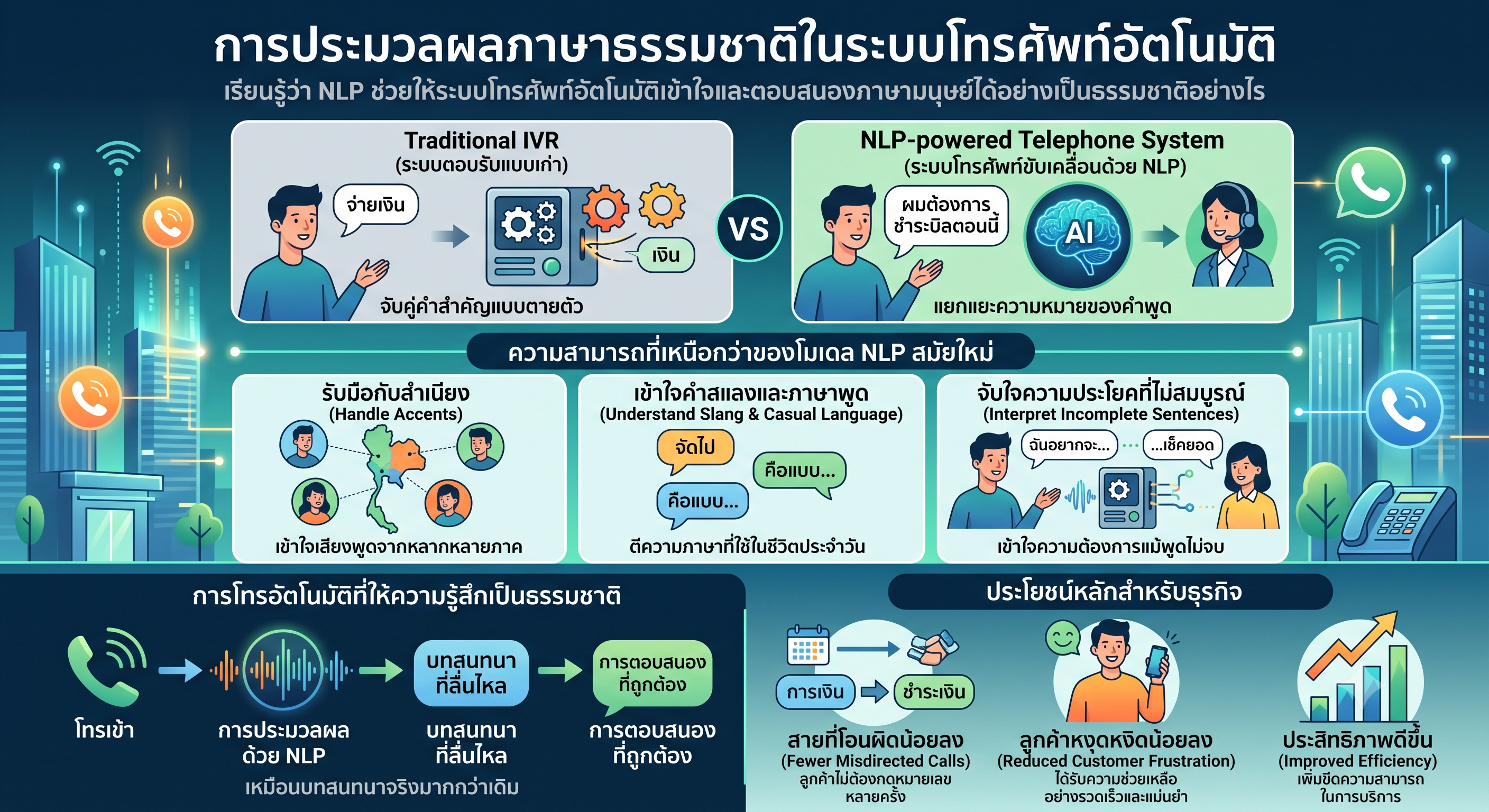
Modern NLP models can handle accents, slang, and incomplete sentences, which used to trip up older interactive voice response systems. This makes automated calls feel less scripted and more like a genuine conversation.
For businesses, better NLP means fewer misrouted calls and frustrated customers. As these models continue to improve, the gap between talking to a machine and talking to a person keeps narrowing.
How NLP Handles Real-World Speech
Older systems fail when callers speak with an accent, pause mid-sentence, or talk over background noise. Modern NLP pipelines combine acoustic modeling with contextual language understanding, so a system can still extract intent even when a caller says something like "uh, I need... my bill, the electric one" instead of a clean command. Teams that replace a keyword-matching IVR with an NLP-based system commonly see intent recognition climb from around 65 percent to over 90 percent within the first few weeks.
Example: Handling a Billing Call
Consider a customer calling about a delayed refund. A rigid IVR requires an exact phrase such as "check refund status." An NLP-driven system instead parses a sentence like "where is my money from that return I sent back" and maps it to the same intent. This flexibility can cut average call-routing time from roughly 45 seconds to under 15 seconds, since the caller no longer has to navigate a multi-level menu.
Multilingual and Code-Switching Support
Businesses serving Thai customers often deal with callers who mix Thai and English mid-sentence. Models trained on code-switched data can interpret a sentence like "ขอเช็ค tracking number หน่อยครับ" without losing meaning, something a rule-based system cannot do reliably. This is one reason NLP adoption is growing fastest among contact centers with mixed-language callers.
What to Evaluate Before Choosing an NLP Vendor
Not all NLP is equal. When comparing providers, ask for numbers instead of marketing claims: intent-recognition accuracy measured on your own call logs, processing latency per utterance (ideally under 300 milliseconds for a natural pace), and how the system handles input it does not recognize. A pilot of at least 500 real calls showing a measurable drop in average handling time is worth far more than a product demo.