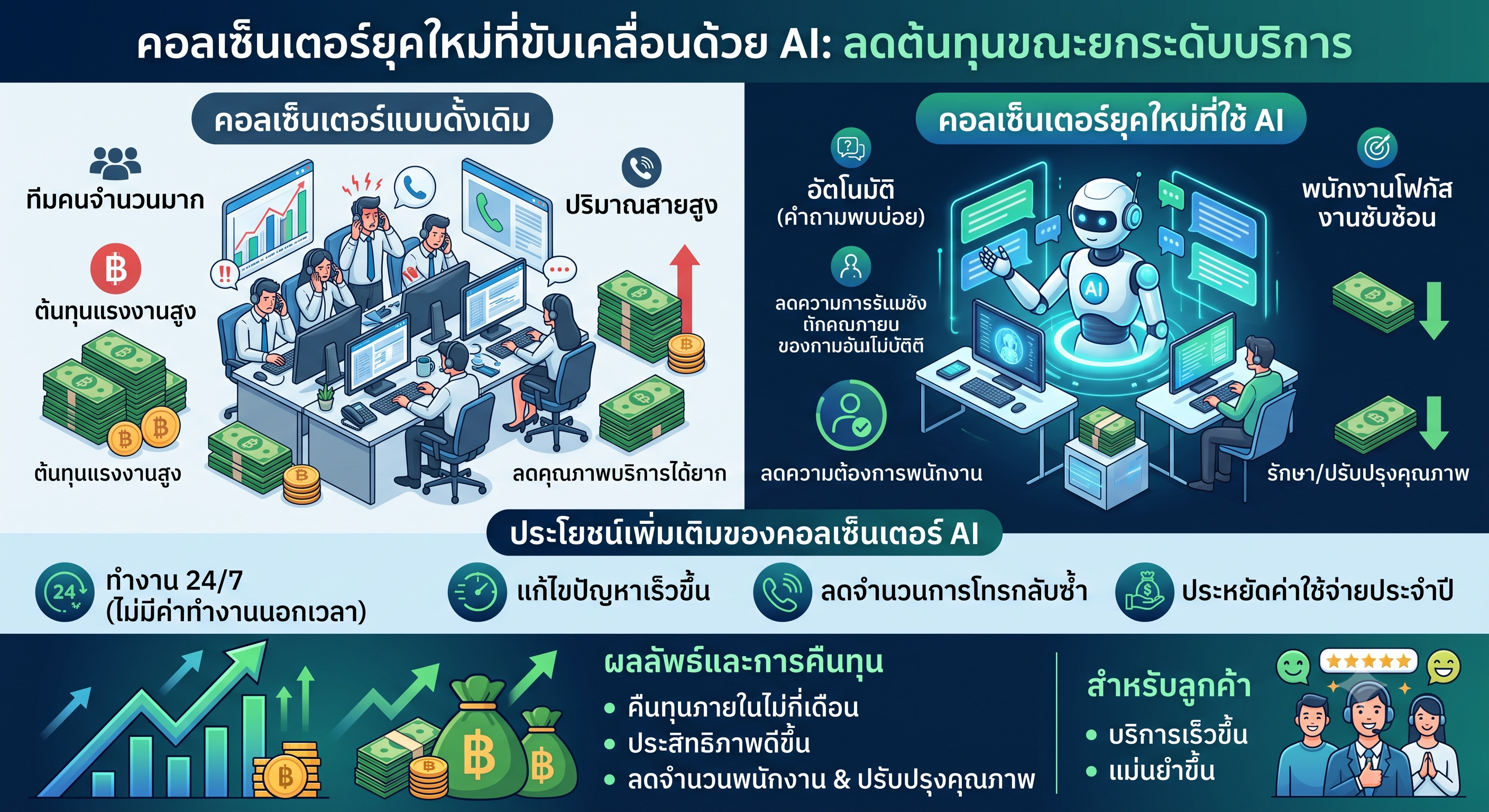
Traditional call centers employ large teams to handle call volumes, which drives high labor costs. AI-powered systems handle routine inquiries automatically, allowing human agents to focus on complex, high-value interactions. This combination reduces headcount needs without sacrificing service quality.
Beyond labor savings, AI call centers operate 24/7 without overtime pay, offer faster resolution times, and reduce repeat calls. These factors compound to create significant annual savings for contact centers of all sizes.
Organizations report that a well-deployed AI calling system pays for itself within months through reduced staffing and improved efficiency, while customers experience faster, more accurate service.
How AI Reduces Operating Costs
The largest cost driver in a traditional call center is staffing: hiring, training, scheduling, and retaining enough agents to cover peak call volume. AI systems handle a large share of routine calls without needing shifts, breaks, or overtime pay. A contact center that automates 60 percent of routine inquiries can often operate with 30 to 40 percent fewer agents on the phone floor, while redirecting the remaining staff toward complex cases that actually need human judgment. Training costs also drop, since new agents no longer need months of practice to handle high call volumes competently.
Example: A Regional Retail Chain
A mid-sized retail chain with 12 stores previously ran a 20-person call center to handle order status checks, returns, and store hours questions. After deploying an AI voice agent for these routine categories, the company reduced its phone staff to 8 people focused on complaints and account issues. Average cost per call dropped from roughly 45 baht to under 15 baht, and the AI system answered calls instantly around the clock, including nights and public holidays when the original team was unavailable.
Maintaining Quality While Cutting Costs
Cost reduction only works if service quality holds up, and this is where deployment details matter. AI agents perform best when given clear escalation rules: any call involving a complaint, a payment dispute, or an emotional customer should route to a human within seconds, not after several failed automated attempts. Companies that measure customer satisfaction before and after AI adoption typically see scores stay flat or improve slightly, provided the escalation path is fast and the AI is transparent about being automated when asked.
What to Track Before Scaling Up
Before expanding an AI call center company-wide, it helps to pilot on a single call category for 4 to 8 weeks and track three numbers: cost per resolved call, customer satisfaction score, and the percentage of calls that still require a human agent. If the escalation rate stays under roughly 25 percent for routine categories and satisfaction holds steady, that is a strong signal the deployment is ready for a broader rollout across other call types.