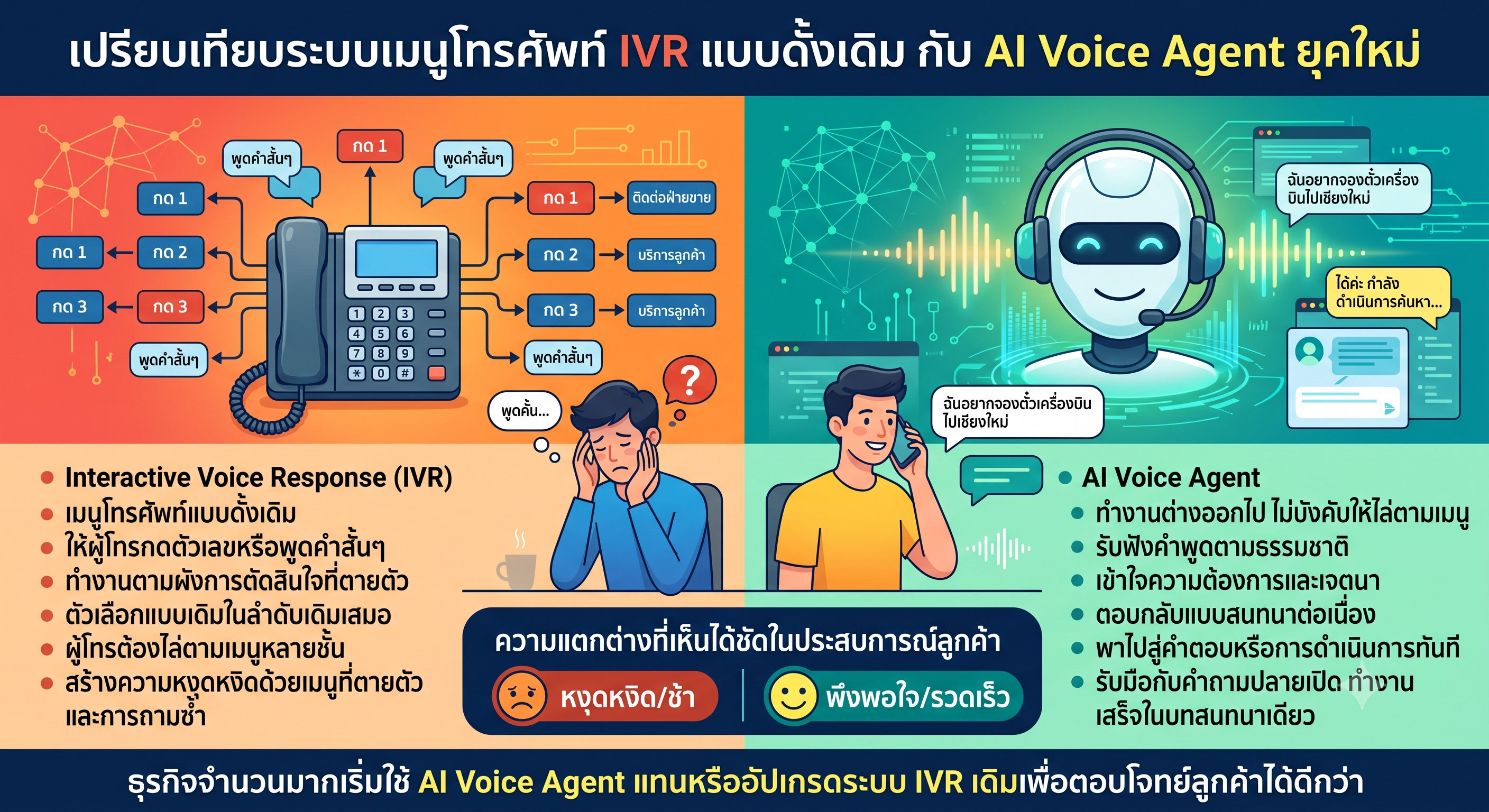
Interactive Voice Response, or IVR, is the classic phone menu that asks callers to press a number or say a short word to reach a department. It follows a fixed decision tree, so every caller hears the same options in the same order, regardless of what they actually need.
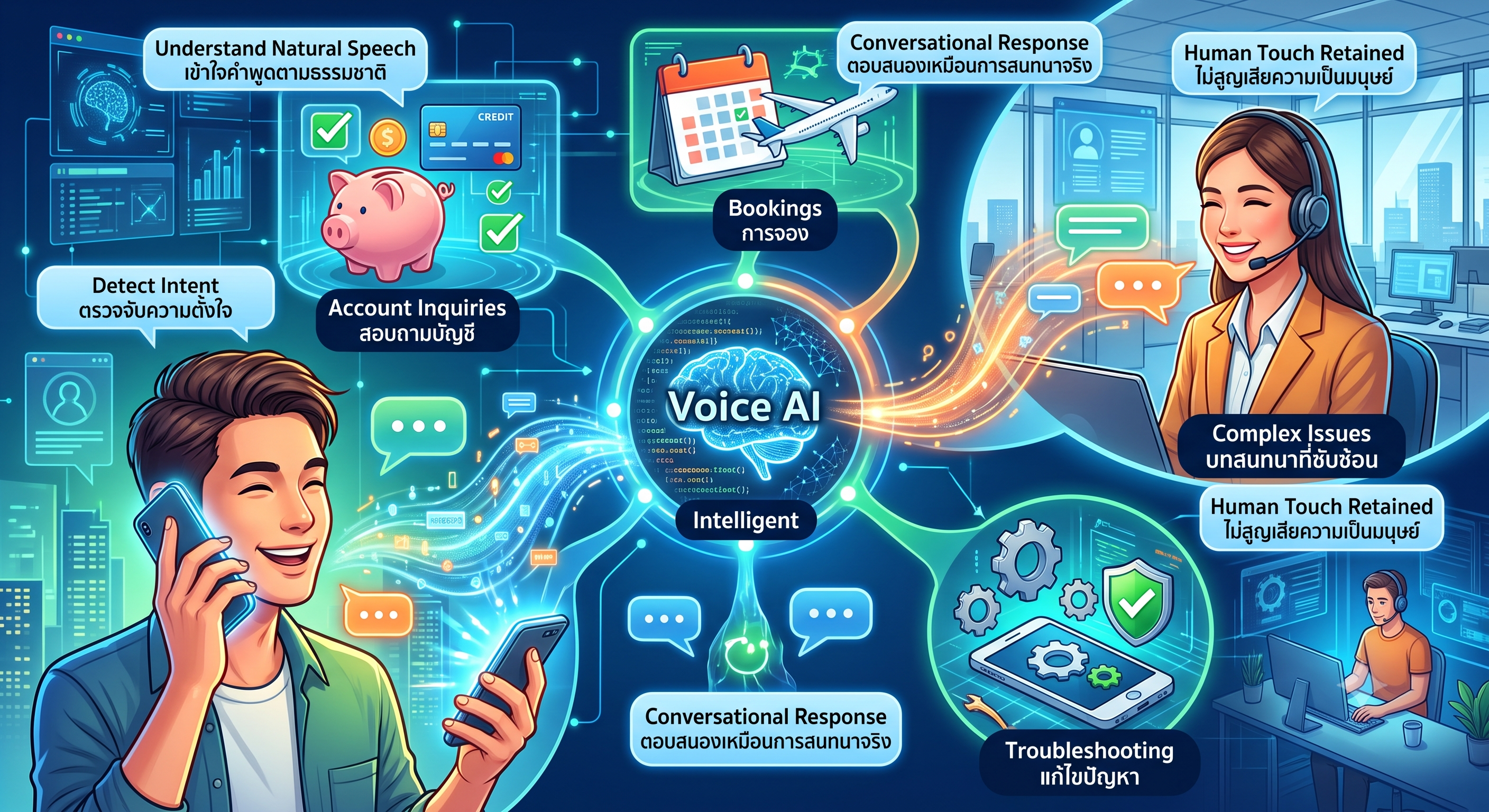
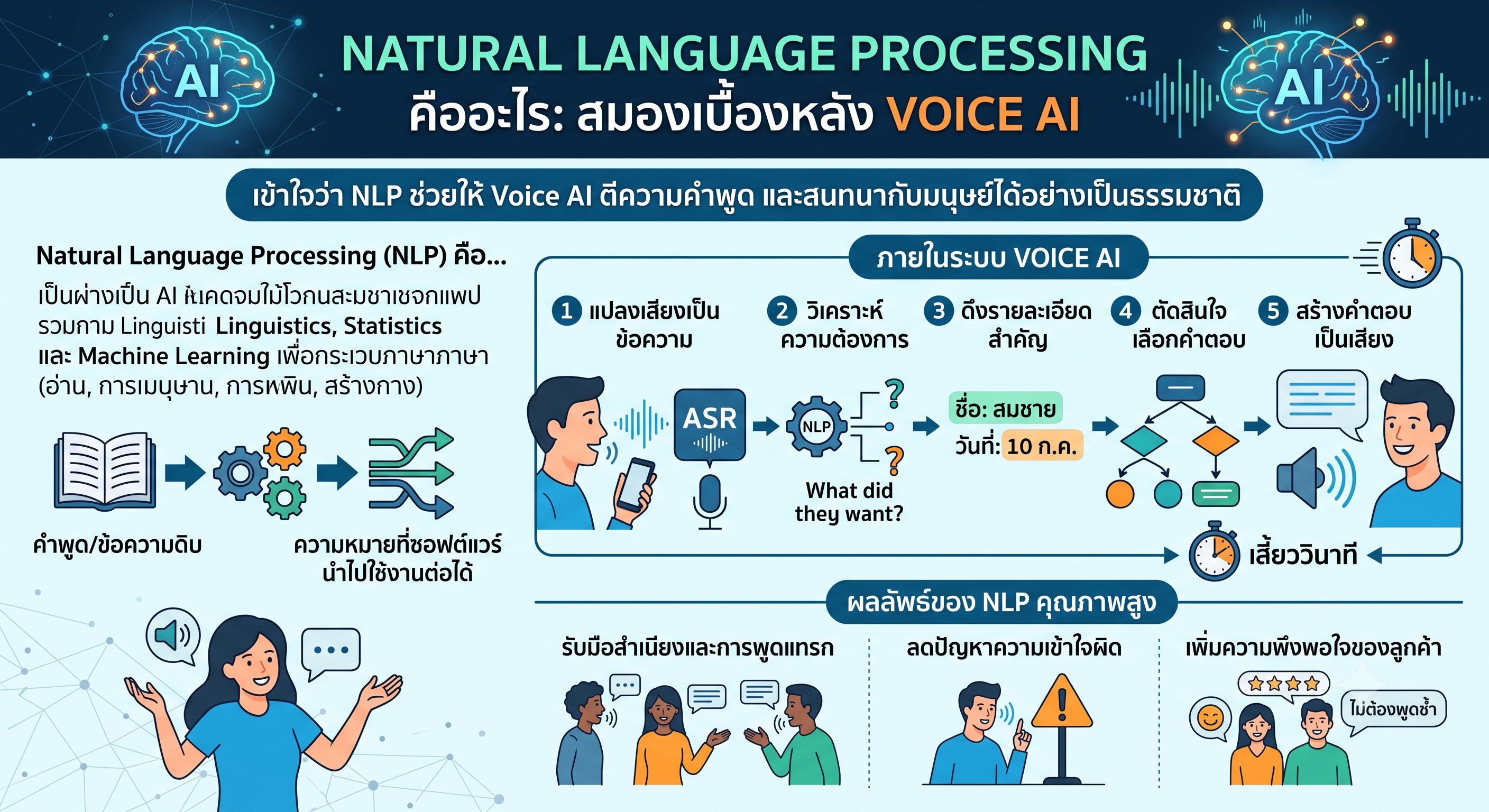
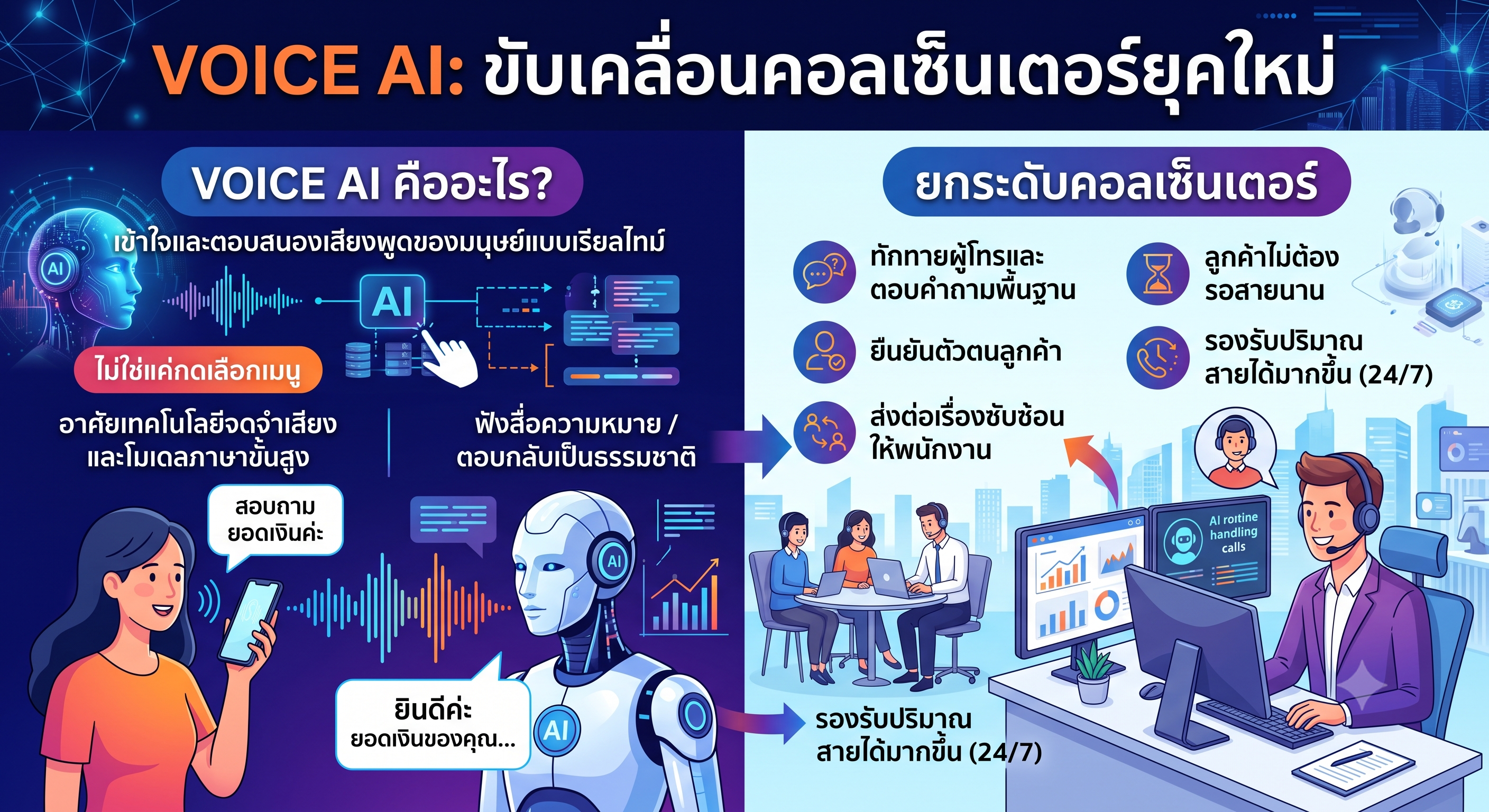
An AI Voice Agent works differently. Instead of forcing callers through a menu, it listens to natural speech, understands the request, and responds conversationally, jumping straight to an answer or action without requiring the caller to navigate multiple layers of options.
The practical difference shows up in customer experience: IVR often frustrates callers with rigid menus and repeated prompts, while an AI Voice Agent can handle open-ended questions, follow up naturally, and complete tasks in a single, flowing conversation. Many businesses now use AI Voice Agents to replace or upgrade legacy IVR systems.
Where IVR Still Makes Sense
IVR is not obsolete everywhere. For very simple, high-volume tasks with a small number of fixed outcomes, such as checking whether a store is open or confirming a package has shipped, a short menu can resolve the call faster than a conversation would. IVR is also cheaper to build and maintain, since it does not require language understanding models, and it behaves predictably in every call, which matters for regulated processes like verifying an account number before disclosing balance information.
Example: A Bank Call Comparison
Picture a customer calling to check whether a recent transfer went through. With a legacy IVR, they might press 2 for account services, then 4 for transfers, then enter a 10-digit account number on the keypad, then wait through a recorded summary before finally hearing the answer, often 90 seconds or more. With an AI Voice Agent, the same customer can simply say "did my transfer to Somchai go through yesterday," and the system authenticates them by voice or a quick verification question, checks the transaction, and answers directly, typically in under 20 seconds.
Migration Path from IVR to AI Voice Agent
Most companies do not replace IVR overnight. A common approach is to route the highest-volume, most repetitive call types to an AI Voice Agent first, such as balance checks or appointment scheduling, while leaving IVR or a human queue in place for rare or sensitive requests. Over 3 to 6 months, as the AI system proves accurate on those categories, businesses gradually expand its scope and shrink the legacy menu to a fallback option rather than the default experience.
What to Measure When Comparing the Two
When deciding how far to shift from IVR to an AI Voice Agent, three metrics matter most: average call duration, first-contact resolution rate, and containment rate, meaning the percentage of calls fully resolved without a transfer to a human. Businesses that track these numbers before and after switching typically see call duration drop by 30 to 50 percent for routine inquiries, along with a noticeable rise in first-contact resolution once the AI Voice Agent has been tuned on real call data for a few weeks.